Monday, August 18, 2008

PM : Muslims, stay engaged


THE Malay-Muslim community should stay engaged with the other races through community and grassroots activities even as they maintain their traditions and religious beliefs, Prime Minister Lee Hsient Loong said in his annual address to the nation on Sunday night.

He also urged mosques to organise events with out community groups to strengthen multi-racial and multi-religious links.

RELATED LINKS
'As we maintain our traditions and practise our religious beliefs, we also need to strengthen our togetherness as one nation,' said PM Lee, speaking in Malay at the the National Day Rally at the University Cultural Centre in Kent Ridge.

'This is how we have kept our society cohesive and harmonious. We must treasure this precious achievement, and do our best to keep it this way.'

He lauded one event which he attended recently as a good example of an activity which reached out to other communities.

The Rahmatan Lil Alamin (Blessings to All) event at the Al-Iman Mosque in Bukit Panjang organised a blood donation drive and provided meals for poor Singaporeans of all races and religions.

Said Mr Lee: 'The food was cooked by volunteers from all the mosques in Singapore. I did not donate blood but I was lucky to enjoy the delicious nasi briyani.'

Summing up his Malay speech, he said the Malay-Muslim community here is building a progressive and well-integrated community of excellence.

'The spirit of the community is strong, united and confident,' he added, pledging that the Government would continue to give full backing and support to the community.


PM : Upgrade Older Mosques


Upgrade older mosques


IT is time to focus on upgrading older mosques, now that community efforts to build new and modern mosques have proven successful.

To do this, Prime Minister Lee Hsien Loong on Sunday night suggested starting a mosque upgrading programme.

RELATED LINKS
Speaking in Malay at the start of the National Day Rally at University Cultural Centre, he said that mosques built over 20 years ago are showing signs of wear and tear, and need a new lease of life.

'This can be done by upgrading and adding new facilities to our old mosques. For example we can provide activity rooms for youths and lifts and ramps for the elderly,' he said.

'The community can then enjoy mosques which are up-to-date, and meet the needs of the modern Muslim community.'

Mr Lee made these comments as he praised the Malay community?s success in building mosques in new Housing Board estates for over 30 years.

Money for this comes from the Mosque Building and Mendaki Fund. Working Muslims contribute to it, giving monthly donations, ranging from $2 to $11, depending on their salary. Wealthy Muslims can choose to give more.

So far, 22 mosques have been built, and the 23rd, Al-Mawaddah Mosque in Sengkang, will be ready by December.

Mr Lee also suggested hiving off some of the fund to boost religious education programmes

One beneficiary could be the joint madrasah system. Three of the six madrasahs here come under the system, as part of an initiative to lift academic standards at Islamic religious schools here.

Mr Lee said that the schools need more resources to upgrade their programmes. They have been raising funds on their own and getting support from the Islamic Religious Council of Singapore (Muis).

The Government had considered funding them, he said, but felt it would be difficult to justify this, as madrasahs do not come under the state school system.

So this is where the Malay-Muslim community can step in to support them, he said.


We All Love the PRC


What a wonderful National Day present! We got a silver medal! Well done Wang Yuegu, Feng Tianwei and Li Jiawei! Our first Olympic medals in over half a century.

Since we're all watching the Olympics, and should be patriotically proud of our national table tennis team's silver medal achievement, I thought it would be good to also know a little bit more about the state of Islam in China.
After all, we are all so focused on the rising dragon in all other aspects, we should also keep track of this aspect.

I found a blog about China Muslims that is not the usual fundamentalist rant about how they are being oppressed, etc.
You know, just like how most Muslims from majority-Muslim countries always seem to think that we Singaporean Muslims are all suffering, oppressed and in need of liberation from Satanic non-Muslim governments who are killing us with better democratic rights, religious freedom and economic opportunities than their own "Islamic" countries? (I know that they mean well, but it is no different from when the Europeans "modernised" us for our own good, to be like them).

So before we jump on the "oppressed Muslim" bandwagon with the rest of the jihadi bunch, I suggest that we hear something about China Islam from China Muslims, instead of people in the Mideast.


Hey, the Chinese gave us some of the greatest Muslims in history - Admiral Cheng Ho (ZhengHe), remember?

Of interest in this blog is an article on the hadith "Seek knowledge even to China" - we've heard that it is not authentic, right? Really? Think again.

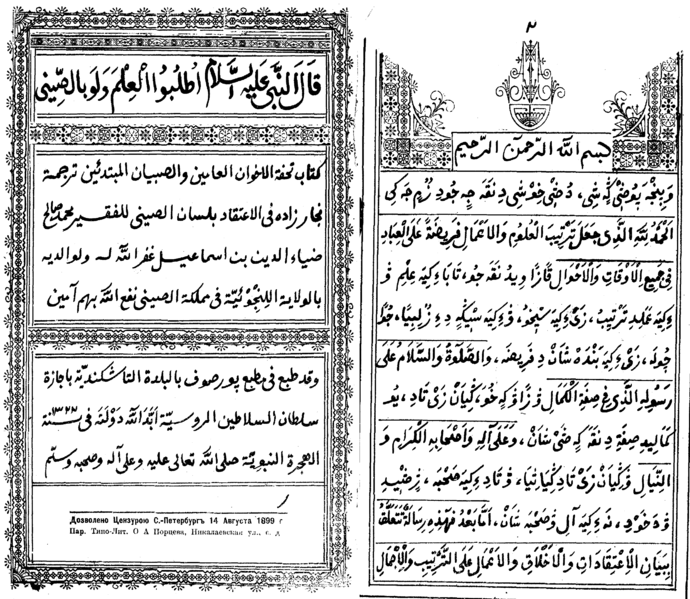
Did you know that the Chinese Muslims could write Chinese with Arabic letters, like we write Malay in Jawi? They call it Xiao'erjing. Here's an example -

Here's an old kitab in Xiao'erjing Chinese translation of Arabic on the left -


Also, I bet you did not know that in Chinese, halal is called qīngzhēn cài (清真菜) or "pure truth food." A mosque is called qīngzhēn sì (清真寺) or "pure truth temple.".

How beautiful.

Friday, August 15, 2008

Conversations with God


The Month of Sha'ban

(continued from the book, Nisfu Syaaban : Kelebihan dan Amalan, by Syed Hassan bin Muhammad Alattas, Masjid Baalwi. Translated by me, so all errors are mine)

Sha'ban is a significant month. The Prophet (prayer and peace of God be on him) said - Rajab is God's month, Sha'ban is my month and Ramadan is my people's (ummat) month.

The moon is split
In the month of Sha'ban was the incident the moon was split as mentioned in the Qurna in surah al-Qamar : 1 - the end is near and the moon is split.

The command to selawat
The command to selawat (praise) as stated in surah al-Ahzab:56 was sent in this month - Indeed God and the angels selawat on the Prophet. Oh you who believe, selawat on him and give him the best of greetings.

The change of the qiblat
The command from God the Exalted to change the qiblat from Masjidil Aqsa in Palestine to Masjidil Haran in Makkah took place in this month in the year 8 AH. This is stated in the Qur'an in surah al-Baqaerah:144 - Turn your faces to the direction of Masjidil Haram.

The Ascension of Deeds
Every Monday and Thursday, God the Exalted raises the deeds of a Muslim that was done in that week.
Every Sha'ban God the Exalted raises the deeds of a Muslim that was done in that year.
Every Lailatul Qadr God the Exalted raises the deeds of a Muslim that was done in his/her life.
As such, we find the Prophet (prayers and peace be on him) fasted on every Monday and Thursday, as well as often in Sha'ban. When asked he (prayers and peace be on him) said - This is the month wherein deeds are raised to God the Master of the Universe, and I would like it that when my deeds are raised, I am in a state of fasting.

Worships on the eve of Nisfu Sha'ban

(continued from the book, Nisfu Syaaban : Kelebihan dan Amalan, by Syed Hassan bin Muhammad Alattas, Masjid Baalwi. Translated by me, so all errors are mine)

The righteous of the past increased their worship on the eve of Nisfu Sha'ban. Amongst the things they did were -

To recite the surah YaSin
Recite the surah al-Fatihah and YaSin as as many as 3 times with the correct intentions (see my earlier post) followed by the doa of nisfu Sha'ban (below).

To pray tahajjud
Increase the optional (sunnah) prayers at night. This was the practice of our Master the Prophet of God (prayer and peace of God on him). Our Mistress Aishah (may God be pleased with her) said - so long was his prostration that I thought he had passed away.
To perform the tahajjud prayer at night brings great reward. The Prophet (prayer and peace of God be on him) ever said - two raka'at prayer at night is a treasure amongst the treasures of goodness.

Fasting
The Prophet (prayer and peace be on him) encouraged fasting on the day of Nisfu Sha'ban as stated - If it is the eve of nisfu Sha'ban, arise at night and fast on its day.
Fasting here means to fast on the 15th of Sha'ban, not the 14th. It means the day after recitation of surah YaSin 3 times with the doa.
The intention of the fast is - I fast tomorrow in the day of nisfu Sha'ban as sunnat because of God the Exalted.

Thursday, August 14, 2008

The Names of Nisfu Sha'ban

(continued from the book, Nisfu Syaaban : Kelebihan dan Amalan, by Syed Hassan bin Muhammad Alattas, Masjid Baalwi. Translated by me, so all errors are mine)

The Names of the Eve of Nisfu Sha'ban

Abul Khair al Talaqaani (God have mercy on him) counted the names of the eve of nisfu Sha'ban as many as twenty-two. Amongst them that are well known are -

The Night of Granting of Prayers
The eve of nisfu Sha'ban is the night wherein God the Exalted grants requests. There are so many hadeeth from the Prophet (prayer and peace of God on him) that explain this. Amongst them is a hadith from Imam al-Sayuti from Ibnu Asaakir from Abi Umamah (God have mercy on him) - the Prophet (prayer and peace of God on him) said, on five nights no prayer is rejected. The first night of Rajab and the even of nisfu Sha'ban, and the eve of Friday, and the eve of Eidul Fitr, and the eve of Eidul Adha.
Ibn Omar (God have mercy on him) narrated - on five nights no prayer is rejected. The eve of Friday and the first night of the month of Rajab and the eve of nisfu Sha'ban and the night of Lailatul Qadr and the two eves of Eid.

The Night of Allocation of Fate
The eve of nisfu Sha'ban is also called the night of determination, allocation and fate. On this night God the Exalted determines the fate of a person as to whether his/her provisions are increased or decreased. Whether his/her age will be extended or shortened. Whether there will be any decree of God the Exalted that will be handed down.
Imam an-Naablusi related that the Prophet (prayer and peace of God be on him) ever said - Indeed the prayer on this night will not be rejected.
Therefore the learned of the past recited the famous prayer of nisfu Sha'ban that contains - the eve of nisfu Sha'ban in the blessed month of Sha'ban completes every mater that contains wisdom and determination.
Clearly God the Exalted may amend fate that is predetermined if He wishes to, as stated by Him in the Qur'an in surah al-Hadid verse 2 - And He is Most Powerful over all things.
Imam as-Shafi'e (God have mercy on him) often prayed with the famous prayer - Oh God, Oh the Sublime, we beseech from You gentleness in the fate that You decree.
So also in a hadith where the Prophet (prayer and peace of God be on him) said - the decree of God cannot be moved except by prayer.

The Night of Mercy
The eve of nisfu Sha'ban is the night where God the Exalted sends down mercy. In a hadith, the Prophet (God bless him and grant him peace) said - Indeed God is merciful to my ummat (my people) on this night as numerous as the strands of wool on the sheep of Bani Kalb.
Bani Kalb was a tribe in Yemen.
The similitude of what is said by the Prophet (God bless him and grant him peace) illustrates how much the mercy of God is sent down on that night. There is not a single person from the past to this day who will be able to count the strands of wool on one sheep, let alone of a tribe.
Therefore, would it not be a great loss to those who pass the opportunity to receive this great mercy? When God the Exalted gives mercy to us, it means God gives ease, happiness, peace, joy, pleasure, enjoyment and tranquility. This is mercy. And mercy is sent by God the Exalted so much to those who worship and keep alive the eve of Nisfu Sha'ban.

The Night of Blessing
A person who has blessings will have a joyful life. Even if his earnings are little, his spending will be sufficient. No borrowings. No worries even though others may perceive him as poor.
Food that contains blessing will be sufficient, even if not much in amount. Crops that contain blessing will provide greater yield and be of use. Blessing means a lot of goodness.
Our Mistress Aishah (may God be pleased with her) narrated a hadith from the Prophet (prayer and peace of God be on him) - God the Exalted pours forth goodness on four nights of pouring, the even of Eidul Adha, the eve of Eidul Fitri, the eve of Nisfu Sha'ban and the eve of Arafah.

The Night of Forgiveness
For the people who have sinned, this night is the one to ask for forgiveness from God the Exalted, because this is the great night of forgiveness.
Imam al-Tirmizi and Ibn Maajah narrated a hadith from Our Mistress Aishah (may God be pleased with her) that the Prophet (prayer and peace of God be on him) in this matter said - God the Exalted gives forgiveness more than the strands of wool on the sheep of Bani Kalb.
Imam Ahmad ibn Hanbal (may God have mercy on him) brings a hadith in his Musnad - Indeed God the Exalted has come on the eve of Nisfu Sha'ban to his slaves and forgives men on earth except for the mushrik (idolators) and mushahin (schismatics).
In another hadith from our Mistress Aishah (may God be pleased with her), the Prophet (prayer and peace of God be on him) said - Oh Humairah (Aishah's pet name), do you know what is this night? This is the eve of Nisfu Sha'ban. Indeed God the Exalted on this night releases from hellfire as many as the strands of wool on the sheep of Bani Kalb. I asked, O Prophet of God, what is the connection with the sheep of Bani Kalb? He (prayer and peace of God be on him) answered, there is no tribe amongst the Arabs that has more sheep than they do. However, I say that it does not include six types of people : those who persevere to drink alcohol, those who persevere in usury and fornication, those who sever ties between people, the makers of idols and those who spread lies.
Al Allamah As Sheikh Abdul Hamid Quds, the scholar of the sacred mosque of Makkah, in his book Kanzun Najaah, added to this the collectors of taxes that are forbidden by Islam, people who are arrogant, and oppressive traders (or those who lie on oath).
There is narration that add sorcerers, idolators, fortune tellers, murderers and those who kill themselves.
Sins such as these require repentance before God the Exalted sends down forgiveness of them.

Repentance
Repentance has three cautions -
First - to know truly that what was done was wrong in the eyes of religion.
Second - to feel sorry for what was done.
Third - to vow to oneself with utmost sincerity that one will never do it again.

The Night of Redemption
The eve of Nisfu Sha'ban is said to be the night of redemption. This can be seen in several hadith wherein the Prophet of God (prayers and peace of God be on him) fasted very much in the month of Sha'ban. Whenever asked, the Prophet (prayers and peace of God be on him) said that it was to redeem sins of a year.

The Night of Intercession
Abu Mansur Mohammaed Ibn Abdullah Al-Hakim An-Naisaaburi (may God have mercy on him) named it the night of intercession. He based this on a hadith wherein the Prophet (prayers and peace of God be on him) said that Jibril (may God grant him peace) had come to him and said, indeed God the Exalted has released from hell fire half of your people and some of them received full intercession (on the eve of Nisfu Sha'ban).

(to be continued, insha Allah... )

Nisfu Sha'ban (the Ides of Sha'ban)

My rough translation of "Nisfu Syaaban : Kelebihan dan Amalan" (Nisfu Sha'ban : Its Greatness and Its Practices) by Syed Hassan bin Muhammad Alattas of Masjid Ba'alwi, Singapore.
(All errors are mine)

Nisfu Sha'ban

Nisfu in Arabic means half. Nisfu Shaban means the half of Sha'ban.
The night of nisfu Sha'ban is the 15th night, that is, its day is the 14th of Sha'ban.

It has become the practice of the righteous since the ancient times to recite surah YaSin on that night with 3 requests.
The first YaSin is read with a request for a long life in obedience to Allah the Exalted.
The second YaSin is read with a request to keep tribulation away.
The third YaSin is read with a request for a rich heart and a good end (husnul khatimah) or to be without need for the aid of others.
(Alhabib Muhammad bin Salem Alattas read the third YaSin with the intent of husnul khatimah and any requests of oneself.)

After completing each reading of the surah YaSin is read the doa nisfu Sha'ban, usually in congregation, in the manner composed by Imam Abdulrahman al-Yafie.

The benefits of reciting the surah Yasin


The reciting on the night of nisfu sha'ban has become a practice of the learned and the righteous for hundreds of years.

The surah is not long, and is frequently recited in group and contains great blessings.

Amongst with, the Prophet, prayer and peace be on him, ever said - whosoever recites the surah Yasin once, it is written by Allah the Exalted for him as if he had recited the Qur'an ten times.

If it is asked is there any one who is able to recite the Qur'an ten times in a night, the answer would yes, it would be possible, but for most it is not possible.

As such, God be praised, those who recite the surah YaSin as many as 3 times on the night of nisfu Sha'ban will receive the merit of reciting the Qur'an 30 times.

The Prophet prayer and peace be on him, often explained that Allah the Exalted gives rewards for each letter of the Qur'an that is recited.

Do not consider "Alif Lam Meem" as one letter, but Alif as one letter, Lam as one letter, and Meem as one letter.

The Prophet, prayer and peace be on him, said - for every thing there is a heart, and the heart of the Qur'an is the Surah YaSin.

He prayer and peace be on him, also said - the YaSin is read for a thing, and for that it is (that is, the surah YaSin is read with whatever intent whatsoever).

The Prophet, prayer and peace be on him, said also - Whosoever recites YaSin, his sins sill be forgiven by God; and whosoever recites it whilst hungry, God will fill him; and whosoever recites it whilst lost, God will guide; whosoever recites it whilst in loss, God will make him find; whosoever recites it over food out of worry that it is not sufficient, God will give him sufficiency; whosoever recites it over a dying person, God will ease the death; whosoever recites it over a birthing woman, God will ease the birthing.

There are numerous hadith that show the greatness of the surah YaSin.

So also there are numerous hadith from the Prophet, prayer and peace be on him, that enourage worship and prayer on the night of nisfu Sha'ban.

Therefore it would be wise for one to begin his/her worship with reciting the surah YaSin that forms the heart of the Qur'an and thereafter to pray to God the Exalted.

The Eve of Nisfu Sha'ban

The eve itself is full of blessing and mercy, second only to the night of Power (Laylatul Qadr).

Our Mistress Aishah, may God be pleased with her, relates that our Master the Prophet, prayer and peace be on him, did not sleep on that night as described in a hadith narrated by Imam al-Baihaqy r.a. - the Prophet of God, prayer and peace be on him, rose in the night (of nisfu sha'ban) and prayed, and so long was his prostration that I thought he had passed on. When I saw that I touched his toe and he moved. Then I drew back and heard him, prayer and peace be on him, say in his prostration, "O God, I ask forgiveness from You from whatever is to be sent down, and I ask your pleasure instead of your wrath. I cannot measure praise to You as You praise Yourself. After he, prayer and peace be on him, had finished his prayer, he said to Aishah r.a., tonight is the night of nisfu sha'ban. Indeed God has come to His slave on this night and given forgiveness for them who asked for forgiveness, and gave mercy to those who give mercy, and He delays mercy and forgiveness to those who hate.


The Prophet Goes to the Cemetery of al-Baqi'

It is narrated that the Prophet, prayer and peace be on him, profusely prayed on the night of nisfu Sha'ban for his ummat, those who are alive and those who have passed away. Sayidatina Aishah, may God be pleased with her, said that on that night the Prophet, prayer and peace be on him, went out from home and went to the cemetery of al-Baqi', where he, prayer and peace be on him, prayed for the believing men and women, and the martyrs.

Imam Ahmad ibn Hanbal, Imam al-Tarmizi, Imam at-Tabarani, Imam Ibn Hibban, Imam Ibn Maajah, Imam al-Baihaqqi and Imam an-Nasaai narrated numerous ahadith that demonstrate the Prophet, prayer and peace be on him, blessed and honoured the night of nisfu Sha'ban with many sunnah prayers, doa, and prayers for forgiveness.

It is narrated that Kaab al-Ahbar said that God the Exalted sent, on the eve of nisfu Sha'ban, the angel Jibreel, peace be on him, to paradise and ordered him to beautify it, and amongst which He said to him, indeed God the Exalted has liberated from hellfire on this night as many as stars in the sky, as many as the days and nights in the world and as many as the leaves on the trees.

Sayidina Omar bin Abdul Aziz, may God be pleased with him, once wrote a letter to his governor in Basra, saying - Guard 4 nights in each year in which God the Exalted sends down great mercy. The first night of Rajab, the even of nisfu Sha'ban, the eve of EidulFitri, and the eve of EidulAdha.

There are some who add to these the eve of Fridays, and the eve of Arafah.

It is narrated that Sayidina Ali ibn Talib, may God ennoble his face, kept himself free for worship 4 nights in each year. The nights were the first night of Rajab, the eve of EidulFitri, the eve of EidulAdha, and the eve of nisfu Sha'ban.

(to be continued, insha Allah, tomorrow)

2474

Wednesday, August 13, 2008

Singaporean and Malay - And Proud!

A Malay reporter wrote in the Straits Times about how she thinks that Malays feel they are the least favourite children of Singapore.
All I can say is, there is a queue of people wanting to wear that label - gays, disabled, foreign brides, taxi drivers .....

The Malays have a saying - di mana bumi dipijak, di situlah langit dijunjung - Wherever on Earth the feet may trod, thereat shall the Heavens be praised.

The reason why many Singaporean Malays are not happy is because they measure themselves according to the criteria of success of other cultures - wealth, status, size of homes, how others see them. In this regard, Mudpie will only refer to the old Sufi adage - in matters of the world, compare thyself with those who have less, and be grateful, and in matters of the hereafter, compare thyself with those who have more, and be inspired.

As Malays, we should be measuring our successes on our own terms.
There are many aspects of the Malays that even other communities admire, and that over the years of my life, I have come to realise are the important KPIs.
We are kind, non-aggressive, forgiving and friendly people.
We have the tightest family ties of any community. We love to play, sing, dance, paint, perform, entertain, socialise and perform with ease all the skills that are totally useless in the non-Malay world.
We're not hung up about being richer than everyone else, because we all know that money never buys happiness.
We may not be staunchly religious, but we are, at our core, all Muslims, and you can see the most tattooed Malay bartender on Hari Raya (Eid) don his full Malay outfit and troop to the mosque to sit next to the bearded and turbaned ustaz from al-Azhar, at the end of which they would turn to each other, shake hands and ask for forgiveness - without any awkwardness whatsoever.
Whenever you go to any hospital, you will see for every 1 Muslim patient, there would be at least 10 visitors (and that does not count the kids).
In which other community do you find a hundred people dropping everything to attend at a funeral upon being informed on the same day of death?
In which other community do you find five hundred people at a void deck large enough to hold only fifty people, attending a wedding reception of someone whom they know as their father's former neighbour's daughter's ex-colleague - and not think it is strange?
We may have the lowest per capita income of all the communities, but per capita we give to charity the most. Our mosques, madrasahs, education funds, orphanages, etc are never short of funding.

Most of all, we are rich in blessings from our forefathers, amongst whom walked unnamed saints.

My advice to people who think they are being treated as second class is - in this world, you are in whatever class you imagine yourself to be.

On another note, this National Day I declare that I am proud to be Singaporean.
Patriotism to the Singaporean is always a curiously mixed sentiment.
No body really loves this country, because the physical country - in terms of buildings and places where you grew up in, and memories of events - constantly crumbles away with redevelopment, leaving no markers.

However, if we do not love Singapore the little red dot on the map, we definitely do love being Singaporean.
We love the way we can embarrassingly use Singlish like a worn and tattered but comfortable singlet that we cannot show when company arrives.
We love how, after living in a city for decades, we will still discover traditional dishes at hawker stalls that we had never before come across.
We love how, in spite of all the gripes about how dirty or slow something is here, we always complain about how clean and fast things are in Singapore whenever we are abroad.
We love how we all hate national service and reservist callups - and yet we will always talk about it for the rest of our lives even more than we do about our weddings.
We love how it feels comforting and safe to hear the plane announcement - "ladies and gentlemen, in a few moments we will be arriving at Singapore Changi Airport", just before the warning that drug trafficking attracts a death penalty.

Most of all, we love how you can always have a place to eat - everywhere.

And we all know that the crescent on the red sea in the Singapore flag secretly represents how prata and teh tarek will always save us in adversity.

Singapore is not the island; it just is the address where Singaporeans live. Singaporeans ARE Singapore.

Ok, what is National Day without a corny Singaporean music video?

Tuesday, August 12, 2008

Ramadan is Coming

Here is a cute video I stumbled on while blogstrolling.

Dawud Wharnsby Ali

I was surprised by the number of positive responses I received on facebook to my entry on Dawud Wharnsby Ali. Many have never heard of him.

For them, here is a link to his website.

Sorry, Wardah does not carry his music. I dont know where you can get them, so tell me if you know.

Sunday, August 10, 2008

Ostentation and the Path

Ostentation [riya'] is forbidden, since He [God] has said (Exalted is He): Woe to those who pray and are distracted from their prayers, who are showing off. [107:4-6] And: So let the one who hopes to meet his Lord do good works and empartner none to his Lord in worship. [18:110]

And the Prophet has said, may God's blessings and peace be upon him: "That which I fear most for you is the lesser idolatory [al-shirk al-asghar]." "What is the lesser idolatory?" they asked, and he replied: "Ostentation."

And God the Exalted, at the time of requiting His servants for their works, will say: "Go to those you showed off for in the world; see if you will find your reward with them!"

Know that the ostentatious person doubtless wishes to have a high-ranking place in the hearts of the people, and this is what makes him behave thus. As for the seeker of the path to the Real, he must strive to lower his rank in the hearts of others.

Far removed, therefore, are the ostentatious from the path of the Real.

From the book:
The Degrees of the Soul : Spiritual Stations on the Sufi Path
Shaykh Abd al-Khaliq al-Shabrawi
trans. Mustafa al-Badawi.


2316

Saturday, August 09, 2008

Humiliation

A Muslim's humiliation comes from his heedlessness of his religion, not in his lack of wealth or stature.

- Our Master the Caliph Omar, God have mercy on him.

Midnight - Dawud Wharnsby Ali

Dawud Wharnsby-Ali writes some very thoughtful songs, and spins little tales in delightfully picturesque forms. It is rare nowadays to hear a song and wonder at the beauty of its lyrics, and thank God he is gifted with such a talent, and puts it to good use.

His latest creation is Midnight. It appears to be autobiographical, and makes us think of the sacrifice one may have to make in pursuit of what one believes in. To lose one true love to gain the love of the True, is that a sacrifice we are ready to make?


2280

On Repentance, Hope and Fear

[The saint] al-Hasan al-Basri, may God have mercy on him, has said:
"Hopes for forgiveness have deceived some people until they left the world as bankrupts," that is, devoid of good works.
And he has said, may God have mercy on him:
"the believer conjoins excellent behaviour with fear, while the hypocrite conjoins vile behaviour with security; for the believer wakes up apprehensive and ends his day apprehensive; he works and says: "I shall not be saved, I shall not be saved", and the hypocrite abandons work and says: "Most people are like this, I will be forgiven." The Prophets and the saints, perfect as they were in their knowledge of God, their good opinions of Him, good works, and scarcity or total lack of sins, were nonetheless exceedingly fearful and apprehensive. They are those whom God has guided, so follow their guidance." [VI:90]

2272

Friday, August 08, 2008

Blessed be the children

If you wish to become a saint, change your character into the character of children. Children have 5 qualities, and if adults had these same qualities, they would attain the rank of saints -
1. they do not worry about their daily bread,
2. when they fall sick, they do not complain night and day about their misfortune,
3. whatever food they have, they share,
4. when they fight or quarrel, they do not keep grudges in their hearts, but make up quickly,
5. the slightest threat makes them frightened and brings tears to their eyes.

- Imam al-Ghazzali

True Contentment

Moses asked God to show him one of God's friends. He was told to go to a certain vally. Moses went and found a man dressed in rags, starving, and lice-ridden.
Moses said, "Can I do anything for you?"
The man answered, "Messenger of God, please bring me a cup of water."
When Moses returned with the water, the man had died. He left to look for a piece of cloth to bury him in, and when he returned, Moses found that the body had been mostly devoured by a lion.
Distressed, Moses cried out, "O God, you have made human beings from clay. Some experience great happiness; others are tortured and miserable. No one can understand this paradox."
An inner voice spoke to Moses: "This man relied upon me for everything. Then he relied on you for drink. He should not have asked for help from another after having been content with me."

Enemies and Friends

"Do not buy the enmity of one man for the love of a thousand men".
Imam al-Ghazzali

Monday, August 04, 2008

The Unbearable Lightness Of Being

Ah, make the most of what we yet may spend,
Before we too into the Dust Descend;
Dust into Dust, under Dust, to lie,
Sans Wine, sans Song, sans Singer and - sans End!

Why, all the Saints and Sages who discuss'd
Of the Two Worlds so learnedly, are thrust
Like follish Prophets forth; their Words to Scorn
Are scatter'd, and their Mouths are stopt with Dust.

Oh, come with old Khayyam, and leave the Wise
To talk; one thing is certain that Life flies;
One thing is certain, and the Rest is Lies;
The Flower that once has blown for ever dies.

With them the Seed of Wisdom did I sow,
And with my own hand labour'd it to grow:
And this was all the Harvest that I reap'd -
"I came like Water, and like Wind I go".

Omar Khayyam (1048-1122) - The Rubaiyat.